Google Brings MCP to Google Home, Letting AI Agents Run Your Smart Home

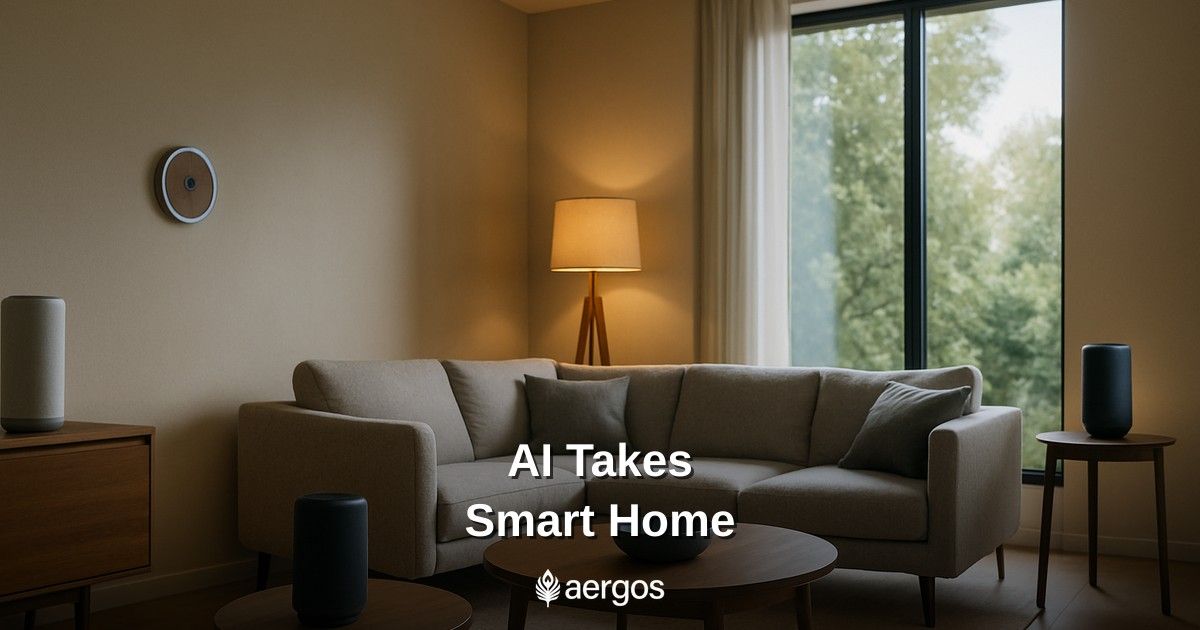
Google quietly crossed a significant line this week. On Wednesday, September 16, 2026, the company rolled out early access to a Model Context Protocol (MCP) server for Google Home, allowing AI agents to directly control connected smart home devices using natural language. According to Your AI agents can now control your Google Home devices, supported agents include Claude, Hermes, OpenClaw, ChatGPT, and Google Antigravity: any agent that supports MCP can now be wired into your home.
The rollout is limited for now. Google is making access available starting today and over the coming weeks to subscribers on the Google Home Premium Advanced plan in the U.S., the $20-per-month tier. Google declined to comment on whether or when broader availability would follow, according to the TechCrunch report.
What's New: The Details
MCP, or Model Context Protocol, is a standard that lets AI agents securely interface with external systems. Google has already deployed MCP support across Google Cloud, developer tools, and Google Workspace. The Google Home integration extends that infrastructure to everyday consumers who want AI agents handling real-world, physical tasks, not just calendar invites and email drafts.
Once connected, users can give their AI agent natural language instructions to do things like review camera summaries, monitor smart home activity, control connected devices, and build custom smart home dashboards. That's a meaningful jump from the tap-and-toggle experience most smart home users are still living with.
The system supports any device in the Google Home ecosystem. That includes Google Nest doorbells and thermostats, as well as 'Works with Google Home' and Matter-compatible devices like smart light bulbs.
How the Setup Works
The connection requires a bit of setup. According to TechCrunch's reporting, users need to create a Google Cloud project, configure it to use Home MCP, then provide those configuration details to their AI agent of choice. The agent then walks you through signing in and granting the right permissions. Google is also publishing a setup guide in the Google Home Developer Center and is actively collecting feedback from early users through its Smart Home for Developers Community.
Who Gets Access First
Early access is gated behind the Google Home Premium Advanced subscription, the $20/month tier that already includes features like longer event-based video history, descriptive notifications, detailed alerts, and daily summaries. If you're on a lower tier or outside the U.S., you're on the waiting list with no official timeline.
Why It Matters for SEO and AI Visibility
Here's the part that doesn't show up in the consumer tech headlines. This move signals something bigger than smart light bulbs responding to chatbots. Google is standardizing MCP as a connective layer across its entire product portfolio: cloud, workspace, developer tools, and now the home. That is a bet on agentic AI becoming the primary interface layer for how people interact with Google's ecosystem.
If you're an agency owner or in-house marketer thinking about AI search visibility, pay attention. The same shift happening in smart home (where users speak naturally to an agent that fetches, acts, and reports back) is the same dynamic reshaping how people search for information. AI agents don't browse pages the way humans do. They pull structured, trustworthy, well-attributed content and surface it directly. If your clients' content isn't optimized for that retrieval layer, they're invisible in it.
I've been saying this on the conference circuit for the past year: the brands that win in AI-driven search won't be the ones with the most content. They'll be the ones whose content is the most citable, the most structured, and the most trustworthy to an agent trying to answer a question on a user's behalf. Google's MCP push accelerates that world.
There's also a practical point for anyone building or selling SEO services. When Google deploys a protocol like MCP across its ecosystem this broadly (cloud, workspace, now home) it typically doesn't walk it back. This is directional. Agentic interfaces are being treated as first-class products inside Google, not experiments. That has real downstream implications for how content gets discovered, cited, and acted on.
What to Do Now
- Watch the MCP standard closely. MCP is quickly becoming how AI agents talk to structured systems. If your content or clients' content lives inside any platform that could eventually expose an MCP interface (think Google Business Profile, Google Merchant Center, Google Search Console) expect that integration surface to grow.
- Audit how your content is structured for AI retrieval. Agents pulling answers from the web favor content that's well-attributed, logically structured, and answers specific questions directly. Run a content audit with that lens, not just for keywords, but for answerability.
- Get familiar with the agentic search landscape now. Tools like Perplexity, ChatGPT search, and Google's AI Overviews are already operating as agent-like interfaces for your clients' potential customers. Understanding how they retrieve and cite content is core SEO work in 2026, not a future consideration.
- If you're a Google Home Premium Advanced subscriber, test it. Early access periods like this are where practitioners learn how the system actually behaves, not how the press release says it behaves. That hands-on knowledge is an edge.
- Start tracking AI citation visibility for your clients. Knowing whether your clients are being cited in AI-generated answers is just as important as tracking their blue-link rankings. Aergos includes AI visibility tracking to help you monitor exactly that, without building a custom reporting stack from scratch.
Background and Context
MCP wasn't invented by Google. It emerged as an open standard for connecting AI agents to external data sources and tools: essentially a common language that lets agents talk to APIs, platforms, and services without custom integrations built for each one. Google adopting it across multiple product lines is a validation of the standard and a signal that the industry is consolidating around it.
The smart home space specifically has been trying to reach this moment for years. Matter, the cross-platform device compatibility standard that Google Home supports, was supposed to solve fragmentation at the device level. MCP is solving a different layer: not 'can these devices talk to each other,' but 'can an intelligent agent understand, manage, and reason about what all these devices are doing.' Those are very different problems.
For Google, this also extends the value proposition of its Premium Advanced subscription tier at a time when smart home competition from Amazon Alexa and Apple Home remains fierce. Giving paying subscribers a genuine agentic interface, rather than just a voice assistant that controls a single device at a time, is a real product differentiator if the experience holds up.
The broader industry trend is clear: AI agents are moving from answering questions to taking actions. Search was step one. Smart home is a step toward a world where your AI handles tasks across every connected layer of your life. For SEOs and marketers, the question isn't whether this world is coming. It's whether your content strategy is built for it.
Frequently Asked Questions
Related Articles

Glossary terms in this article
Brush up on the definitions.
Google's free business listing tool that manages how a business appears in Google Search and Maps, including the Local Pack.
Google's platform where e-commerce retailers upload product data feeds to appear in Google Shopping, free listings, and Performance Max campaigns.
Google's free webmaster tool that provides data on a site's organic search performance, indexing status, crawl errors, and manual actions.
A clear statement of the specific benefit a product or service delivers to a defined customer, and why it is better than the alternatives.
The planning, development, and management of content to achieve specific business goals across all channels and formats.
The extent to which a brand's content is referenced, cited, or surfaced in AI-generated answers from tools like ChatGPT, Gemini, and Perplexity.
About Matt Weitzman
Senior SEO Strategist & Co-Founder
Matt has over 15 years of experience in technical SEO and digital marketing. He specializes in algorithmic recovery, enterprise architecture, and leveraging AI for content scaling. He is a frequent speaker at search marketing conferences.
More articles by Matt Weitzman