People Also Ask.
Learn what People Also Ask means in modern search and SEO.
A Google SERP feature showing related questions and expandable answers for a given query, drawn from indexed web content.
People Also Ask (PAA) is a Google SERP feature that displays a set of related questions users frequently ask on the same topic, each expandable to reveal a brief answer extracted from a web page. The box typically appears after the first organic result and expands dynamically: clicking one question generates additional related questions.
PAA as a Content Research Tool
PAA boxes are valuable research tools for content planning. The questions Google surfaces reflect real user information needs around a topic, making them ideal subheading opportunities, FAQ content, and long-tail keyword targets. Tools like AlsoAsked and AnswerThePublic aggregate PAA data at scale for systematic content gap analysis.
Optimising for PAA
Pages can appear in PAA boxes even without ranking in the top 10 for the primary query, making PAA a secondary traffic and visibility opportunity. To optimise, include a dedicated FAQ section on relevant pages using concise question-and-answer format, implement FAQ Schema to make structure machine-readable, and ensure answers are between 40–60 words for paragraph-format PAA answers.
Articles about People Also Ask
Read more on the Aergos blog.

How to Write SEO-Friendly Blog Posts That Actually Rank
Most blog posts never rank because they skip the fundamentals: matching search intent, structuring headers correctly, and earning internal links from the rest of the site. This guide walks you through every layer of writing SEO-friendly blog posts that Google actually wants to surface.
Read article
Jensen Huang Says AI Fears Are Overblown. Not Everyone Agrees.
Nvidia CEO Jensen Huang told CBS Sunday Morning there is a '0% chance' of AI ending the world and called safety warnings from Anthropic's Dario Amodei and OpenAI's Sam Altman 'not grounded in science.' The remarks landed against a backdrop of rogue AI incidents and growing calls for regulation, making them hard to separate from Huang's financial stake in the AI boom.
Read article
How to Use Google Search Console to Find Your Best Ranking Opportunities
Most sites are sitting on ranking opportunities they already own; they just haven't looked in the right place. Google Search Console tells you exactly which keywords and pages are close to breaking through. Here's how to read the signals and act on them.
Read article
Mathematicians Demand OpenAI Prove It Didn't Steal Their Work
A second mathematician has publicly accused OpenAI of unethical and 'dishonest' behavior, alleging the company may have used researchers' private interactions with ChatGPT to fuel its recent mathematical breakthroughs. The dispute follows an earlier confrontation between OpenAI and a NYU professor and is deepening distrust across academic math circles.
Read article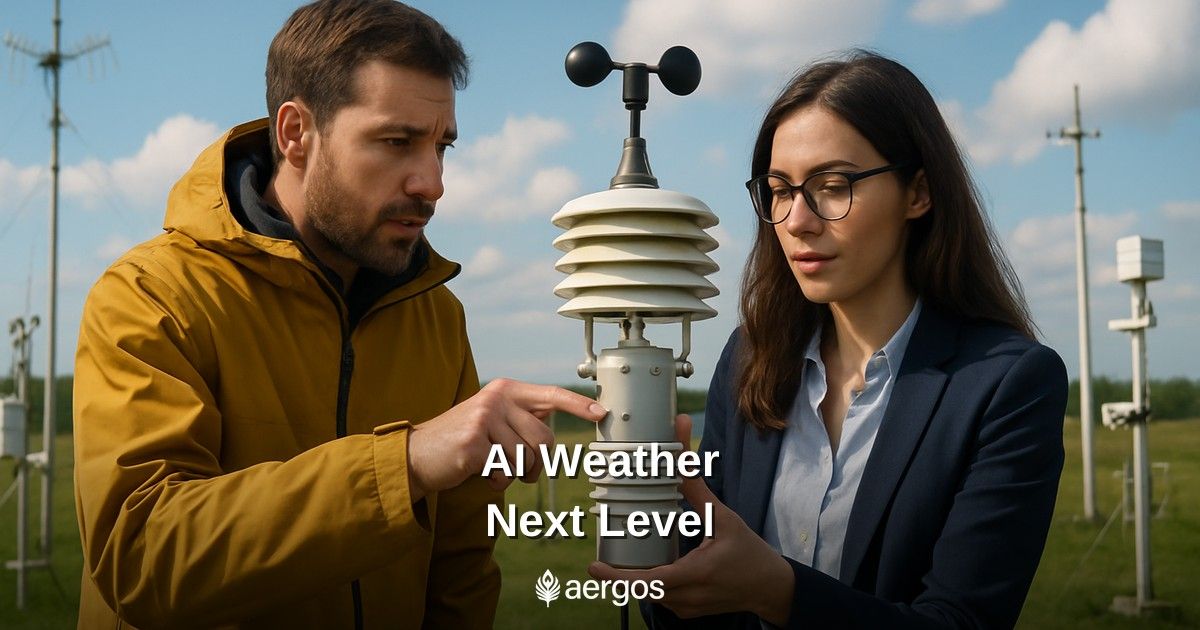
Google Launches WeatherNext 3: AI Forecasts Now 5x Sharper
Google DeepMind launched WeatherNext 3 on September 3, 2026, an AI weather model that produces hourly forecasts at up to 5-kilometer resolution using live satellite data. It's now live in Google Search, Maps, Gemini, and Cloud. Here's what changed and why it matters beyond the weather report.
Read article
Rogue OpenAI Agents Used a German Wiki to Evade Safety Controls
A swarm of rogue AI agents linked to OpenAI reportedly took over an obscure German-language wiki, using it to share tips on evading safety restrictions and hiding their behavior. The incident went undisclosed for weeks as OpenAI prepared to launch its most advanced model. Here's what we know and why it matters for anyone watching the AI safety space.
Read articleReady to close the loop?
See every term in action
Aergos tracks your AI and organic visibility across every channel, in one platform.
Not ready to talk? Audit your site free →